The Information Asymmetry Problem in Traditional ABL
Asset-based lending relationships have long suffered from a fundamental structural inefficiency: borrowers and lenders operate on disparate systems, creating bilateral information asymmetry that imposes costs on both parties. In the conventional model, each borrowing base certificate submission initiates a predictable sequence of reconciliation friction. The borrower prepares calculations using internal spreadsheets, the lender re-performs the same analysis using different tools, and the inevitable discrepancies trigger iterative clarification cycles. This redundant verification process consumes disproportionate time relative to the value it generates, particularly for borrowers whose finance teams already operate under resource constraints.
The economic cost extends beyond mere inefficiency. When information flows are fragmented, both parties maintain higher reserves against the possibility of calculation error or deliberate misrepresentation. Lenders price this uncertainty into advance rates and covenant structures. Borrowers, meanwhile, face reduced access to their own working capital assets and diminished ability to forecast availability with precision. The system effectively punishes both participants for a coordination failure that modern technology can resolve.
Unified Infrastructure as a Coordination Mechanism
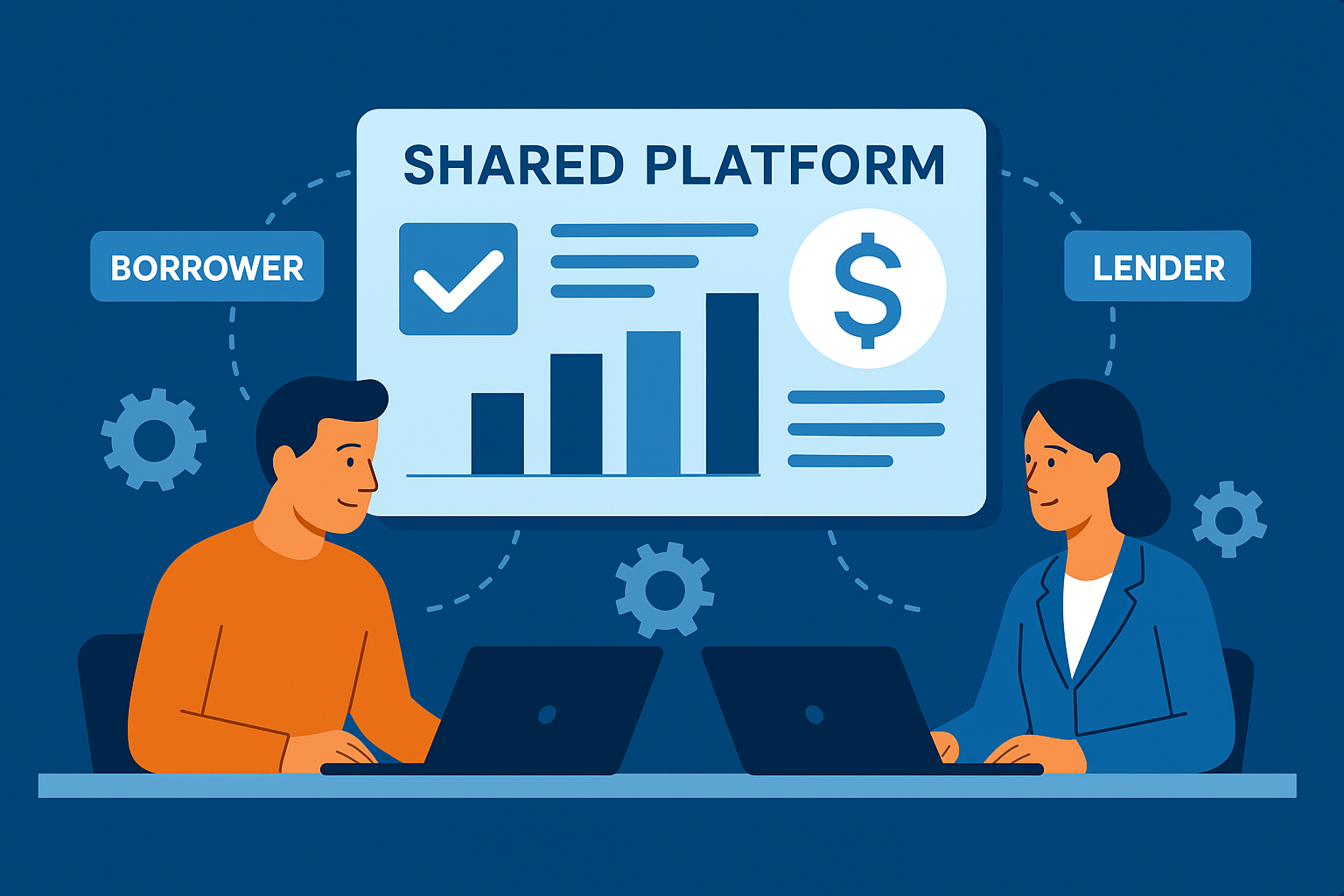
Shared digital platforms fundamentally restructure this dynamic by establishing a single source of truth for eligibility determination and borrowing base calculations. When both borrower and lender operate within the same analytical environment, applying identical rule sets to identical data inputs, reconciliation transforms from a labor-intensive workflow into an automated verification step. The platform itself becomes the neutral arbiter, eliminating the interpretive disagreements that arise when parties use different calculation methodologies.
This architectural shift delivers immediate operational benefits. Approval cycles compress as manual reconciliation steps vanish. The finance team’s monthly borrowing base preparation burden decreases substantially, freeing capacity for higher-value treasury activities. Error rates decline because human transcription and formula inconsistencies disappear from the process. But these efficiency gains, while significant, represent only the surface-level advantages of platform unification.
From Compliance Artifact to Strategic Intelligence
The more profound transformation occurs when borrowers gain access to the same analytical tools and real-time data that lenders use for portfolio monitoring. Traditional borrowing base preparation is a backward-looking compliance exercise: the borrower reports what has already occurred, and the lender validates those historical figures. A shared platform inverts this temporal orientation, converting the borrowing base into a forward-looking instrument for working capital optimization.
With continuous visibility into eligibility calculations, borrowers can monitor how operational decisions affect credit availability before those effects materialize in formal reporting. The CFO can observe in real time how aging accounts receivable concentrations are eroding eligible collateral, or track how customer payment patterns influence dilution reserves. This visibility enables proactive capital management rather than reactive responses to availability constraints that have already crystallized.
Consider the strategic implications for working capital management. A borrower who understands precisely which invoices are approaching concentration limits or aging thresholds can prioritize collection activities accordingly. The treasurer who sees dilution trends emerging can investigate root causes in the revenue recognition or customer service processes before those trends compromise borrowing capacity. The platform transforms ABL infrastructure from a passive financing mechanism into an active tool for balance sheet optimization.
Operationalizing Ineligibles Management
Shared infrastructure makes the composition of ineligibles transparent and actionable. In traditional arrangements, borrowers often receive ineligibles designations as fait accompli determinations with limited explanatory context. The lender identifies certain receivables as ineligible, the borrower’s availability decreases, but the underlying drivers remain opaque. This opacity prevents the borrower from addressing the root causes systematically.
When both parties access the same granular data and eligibility logic, ineligibles become diagnostic signals rather than mysterious penalties. The borrower can analyze patterns across reporting periods: Are certain customers consistently generating ineligible invoices due to documentation deficiencies? Is a specific product line producing disproportionate dilution? Are aging issues concentrated in particular sales channels or geographies? These insights enable targeted operational improvements that directly enhance credit quality and availability.
The feedback loop becomes self-reinforcing. As borrowers address the operational factors driving ineligibles, their credit profiles strengthen, potentially warranting more favorable advance rates or covenant terms in subsequent amendments. The lender benefits from improved collateral quality without increasing monitoring intensity. Both parties gain from the alignment of incentives that shared visibility creates.
Bilateral Trust Through Structural Transparency
Information asymmetry in lending relationships generates agency costs and necessitates verification mechanisms that benefit neither party. Borrowers perceive lender scrutiny as intrusive and time-consuming. Lenders view borrower-prepared reports with appropriate skepticism, knowing that incentives to present favorable pictures exist. This mutual wariness imposes transaction costs and strains the collaborative elements that should characterize a successful ABL partnership.
A shared platform fundamentally alters these incentive structures by eliminating the possibility of divergent interpretations. When both parties observe identical data through identical analytical frameworks, disputes about calculation methodology become irrelevant. There is no “borrower’s number” versus “lender’s number.” There is simply the number, derived transparently from agreed-upon rules applied to verified source data. This structural transparency reduces the verification burden while simultaneously increasing confidence in reported results.
The trust that emerges from this arrangement differs qualitatively from trust built through relationship history. It is not dependent on personal rapport or track record, though those elements remain valuable. Instead, it represents a systemic trust anchored in verifiable process integrity. This institutional trust proves more durable during periods of financial stress when traditional relationship trust often erodes. The borrower experiencing temporary difficulties can demonstrate their situation transparently without fear that data presentation will be interpreted as manipulation. The lender can assess risk accurately without imposing punitive monitoring requirements that signal distrust.
Reducing the Friction Costs of Field Examinations
Field examinations represent a necessary but administratively burdensome component of ABL relationships. For borrowers, the examination period typically requires substantial finance team time devoted to assembling documentation, responding to examiner inquiries, and explaining operational processes. These demands arrive on schedules that rarely align with the borrower’s operational priorities, creating opportunity costs that extend beyond the direct hours consumed.
Shared platforms substantially reduce this friction. When all transactional data, eligibility calculations, and historical borrowing base records reside in a unified system accessible to examiners, much of the traditional information gathering becomes self-service. The examiner can review aging trends, analyze dilution patterns, and verify calculation methodologies without requiring the borrower to prepare custom reports or schedule extensive interview sessions. The examination transforms from an interrogation requiring constant borrower participation into an independent review conducted largely within the platform itself.
This efficiency serves both parties’ interests. Borrowers reclaim the time previously devoted to examination preparation, allowing finance teams to maintain focus on their primary responsibilities. Examiners gain access to more comprehensive data sets than borrowers could practically compile manually, enabling more thorough analysis in compressed timeframes. The examination becomes less adversarial and more analytical, focused on understanding the business rather than testing the borrower’s documentation capabilities.
Strategic Implications for Capital Structure Management
The cumulative effect of these operational improvements reshapes how sophisticated borrowers should think about ABL facilities within their broader capital structures. Traditionally, asset-based credit has been viewed primarily as a liquidity backstop: less expensive than equity, more flexible than term debt, but operationally intensive relative to traditional revolving credit facilities. This characterization undervalues the strategic intelligence that modern ABL infrastructure can provide.
When an ABL facility operates on a shared platform, it becomes an integrated component of the treasury management function rather than a standalone financing arrangement. The real-time visibility into collateral performance and availability informs cash forecasting with greater precision than traditional methods allow. The granular insights into customer payment behavior and working capital efficiency feed directly into broader operational improvement initiatives. The facility itself generates data that proves valuable well beyond its immediate credit function.
This reconceptualization has implications for how CFOs should evaluate ABL relative to alternative financing structures. The all-in cost of an ABL facility should account for the strategic value of the operational intelligence it generates, not merely the explicit interest and fee expenses. For companies with substantial receivables or inventory, this intelligence value may justify ABL even when seemingly cheaper alternatives exist, particularly during growth phases when working capital optimization directly constrains expansion capacity.
Conclusion: Infrastructure as Competitive Advantage
The evolution of ABL from relationship-dependent documentation exercises to platform-enabled strategic partnerships represents more than incremental operational improvement. It constitutes a fundamental restructuring of how credit and operational intelligence integrate within the corporate finance function. Borrowers who recognize this shift and demand collaborative infrastructure position themselves to extract substantially more value from their credit facilities than those who accept traditional approaches as immutable.
The question facing CFOs and treasury professionals is no longer whether shared platforms deliver superior outcomes relative to legacy approaches. The evidence for that proposition has become overwhelming. The relevant question is instead how quickly borrowers can transition existing relationships onto modern infrastructure, and how they can leverage the resulting capabilities to drive competitive advantage in working capital management, cash forecasting, and operational efficiency.
Connect with LoanWatch to explore how collaborative digital infrastructure can transform your ABL relationship from administrative necessity into strategic asset.