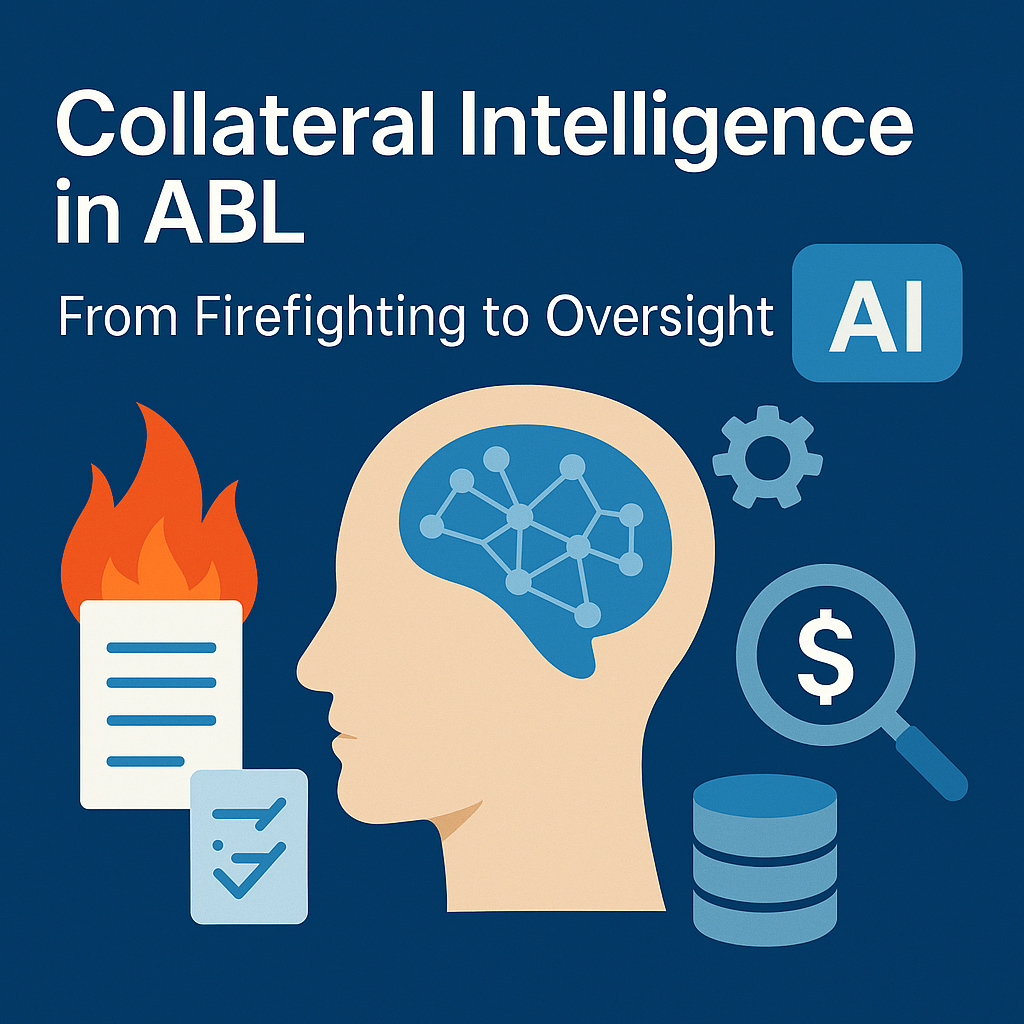
Across secured lending, the story is familiar. Talented teams spend late nights reconciling spreadsheets, validating borrower numbers, and chasing anomalies that surface too late. Work gets done, but it is slow, repetitive, and prone to risk. The ambition is different: move from reactive checks to confident oversight with information that is fresh enough to act on.
What we mean by collateral intelligence
A practical model has emerged that lenders can adopt without ripping out existing systems. It rests on three capabilities that reinforce one another: precise automation of ineligibles and borrowing base calculations, centralized invoice- and item-level data, and AI assistance that answers plain-English questions about availability, risk, and trends. Together, these create a smarter operating rhythm for ABL teams.
Automate the calculations, raise confidence
Eligibility rules and loan terms are only helpful if they are applied the same way every time. Standardizing and automating ineligibles and borrowing base calculations delivers immediate clarity on collateral value, reduces reconciliation, and gives exam and credit leaders an audit-ready trail. What was once a borrower-led exchange becomes a shared, transparent process that moves faster and carries less operational risk.
Turn data from byproduct to strategic asset
Consolidating invoice- and item-level details creates a reliable dataset of record. When calculations are consistent, they also generate clean collateral data as a natural output. This combined source data along with the calculation results support portfolio reporting, trend analysis, and benchmark comparisons. Instead of requesting “one more spreadsheet,” teams can see concentrations, dilution, and aging patterns in a way that is timely and comparable across borrowers.
Let AI do the tedious work and explain the “why”
AI now handles jobs that steal hours from analysts: parsing reports, grouping counterparties, validating exceptions, and assembling exam summaries. More important, it helps the team understand movement in the numbers. Ask, “What changed availability this cycle?” or “Which customers are over 20 percent of AR and past due?” and get a documented answer tied back to source data. This is not a black box. Explanations matter because trust in the calculations is what allows lenders to act quickly and reduce redundant recalculations.
Why this is timely
Portfolios are more complex, regulatory scrutiny is higher, and borrowers expect digital responsiveness. Recent advances in AI make continuous, near real-time insight practical, while most lenders already receive AR, AP, and inventory files that can be transformed into structured intelligence with limited disruption. The pay-off is a shift in time: less rebuilding of what borrowers already produced and more review, decision, and dialogue.
Where to start
Begin by automating eligibility and borrowing base calculations with full lineage and standard logic. Centralize the resulting invoice- and item-level data. Then add an AI assistant trained on ABL context to answer targeted questions and surface exceptions. This sequence builds trust in the numbers first, then expands visibility across the portfolio.
Ready to dig deeper into the model and see examples from the field? Get the full feature from The Secured Lender and explore how collateral intelligence helps lenders move faster with less risk.