Why ABL Teams Lose 40 Hours Per Month to Spreadsheets
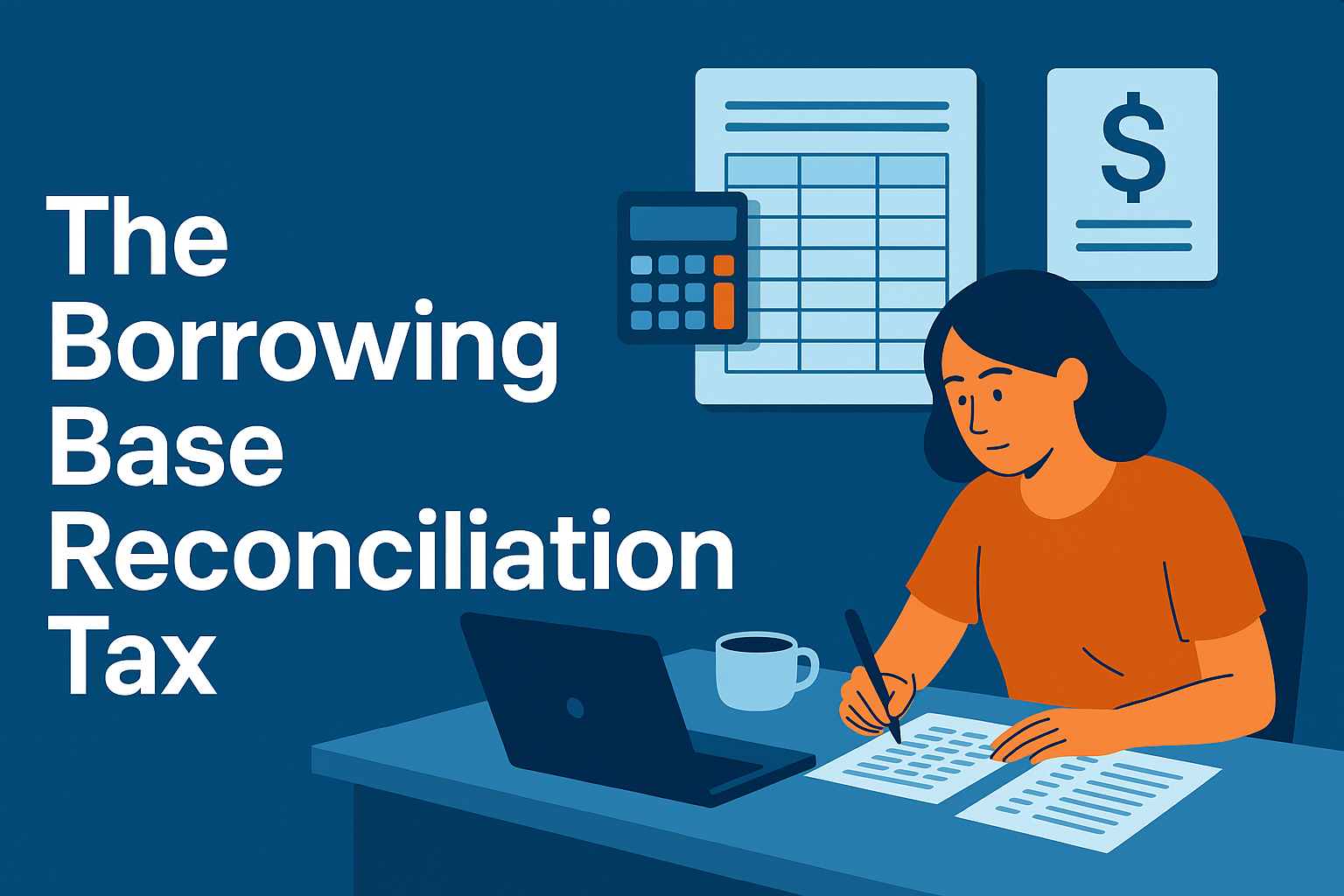
A credit analyst at a regional bank processes 12 borrowing base certificates each month. Each one arrives as a PDF with supporting schedules: accounts receivable aging, inventory reports, sometimes accounts payable if there are AP contras.. She downloads the borrower’s numbers into her template, checks the ineligible calculations, verifies the advance rates, and reconciles everything against last month’s submission and the loan agreement.
Four hours per borrower, on average. 48 hours per month. And that’s before handling exceptions, answering borrower questions, or preparing anything for the portfolio review meeting.
Multiply that across a team of five analysts managing sixty active ABL relationships, and you’re looking at 240 hours per month spent rebuilding calculations that borrowers already performed. At a loaded cost of $85 per hour, that’s $21,080 monthly, or over $250,000 annually, just for one mid-sized ABL team.
This is the borrowing base reconciliation tax. It’s the hidden cost of maintaining collateral oversight through manual processes and disconnected spreadsheets. Unlike actual taxes, though, no one is forcing you to pay it.
Why the Tax Keeps Growing
The borrowing base reconciliation tax isn’t new. What’s changed is the rate at which it compounds.
Portfolio complexity has increased substantially over the past decade. Borrowers operate across multiple entities, currencies, and jurisdictions. Loan agreements layer exception after exception: contra accounts, bill-and-hold provisions, intercompany eliminations, specialized inventory categories. A straightforward advance rate became “85% of eligible receivables, but 75% for receivables over 90 days, 50% for government receivables, and 0% for anything cross-aged to inventory, unless the inventory has been sold and shipped, in which case…”
You know how this sentence ends because you’ve read that loan agreement.
Meanwhile, regulatory expectations have shifted from periodic oversight to continuous monitoring. Examiners ask pointed questions about how often you verify borrower calculations, whether your ineligible determinations match your credit memos, and what happens when borrowers submit numbers that don’t reconcile to their general ledger. The answer “we check everything during the annual field exam” no longer satisfies anyone.
Borrowers have changed too. They expect digital responsiveness (e.g. same-day answers on availability, real-time visibility into their borrowing base, immediate confirmation) when they submit updated reports. The lending relationship increasingly resembles a technology service, not a quarterly conversation.
All of this complexity lands on analyst teams that haven’t grown proportionally. When a mid-market bank doubles its ABL portfolio from 30 to 60 relationships, it rarely doubles its analyst headcount. The reconciliation tax scales linearly with portfolio growth, but staffing doesn’t.
The Components of the Tax
Break down those three hours per borrowing base certificate and you see where the time actually goes.
Data transfer and formatting
20 to 30 minutes copying numbers from the borrower’s PDF into your Excel template, reformatting columns, checking for import errors, and validating that row counts match. This is pure manual labor that creates zero analytical value, but skip it and your calculations will be wrong.
Ineligibles calculation
45 to 60 minutes applying eligibility rules to thousands of invoice or inventory line items. Which customers are over concentration limits? Which invoices are past the aging threshold? What portion of this inventory is raw materials versus finished goods, and does that category even exist in our loan documents? Every portfolio has three or four borrowers where the ineligible rules require genuine judgment. The other eight are mechanical applications of documented criteria, but you still have to perform those calculations by hand.
Reconciliation
35 to 45 minutes comparing this month’s submission against last month’s balances, investigating variances, and confirming that changes in availability make sense given what you know about the borrower’s business. This is where real credit work happens. It’s also where you discover that the borrower applied last quarter’s advance rates instead of the current ones, or forgot about that $500,000 customer that went over the concentration threshold.
Documentation
15 to 20 minutes recording your work in the credit file, updating your portfolio tracking spreadsheet, and preparing notes for the portfolio manager. If you find exceptions, add another hour for emails, phone calls, and follow-up documentation.
The problem isn’t that any single step is particularly difficult. The problem is that this entire process runs on manual effort and institutional memory. Your eligibility rules live in your head, or in a spreadsheet you built two years ago, or in that email thread where the portfolio manager clarified how to handle bill-and-hold. When you’re out for the week, your colleague has to reconstruct your methodology. When you leave for another job, your replacement starts from scratch.
There’s no version control. No audit trail showing why you made specific ineligibility determinations. No standardized application of rules across borrowers. Just twelve separate Excel files that work slightly differently, maintained by five analysts who have slightly different interpretations of the loan documents.
What the Tax Actually Costs
The obvious cost is 240 hours of time every month for that hypothetical five-person team. But the real expense shows up in three less visible places.
Decision latency: When your analysts spend 60% of their time on reconciliation, they have less capacity for proactive monitoring, covenant analysis, or early intervention on deteriorating credits. Problems get identified during the annual field exam instead of during the monthly review cycle, by which point they’ve metastasized into larger issues.
Error risk: Manual processes create error opportunities at every step. Copy the wrong cell, apply the wrong advance rate, or miss a customer that crossed the concentration threshold. Any of these mistakes can result in overlending or unnecessary restrictions on a healthy borrower. Field examiners routinely find material calculation errors in 50%+ of borrowing base certificates (one lender we work with observed material errors on a jaw-dropping 90% of their portfolio), not because borrowers are dishonest, but because manual calculations are inherently unreliable.
Growth constraints: The reconciliation tax creates a hard ceiling on portfolio growth. If your five-person team is already working at capacity with sixty borrowers, adding twenty more relationships means either hiring three more analysts or accepting degraded oversight quality. Most banks choose constrained growth over expanded headcount, which means passing on deals that would otherwise make sense.
The Path Forward
The borrowing base reconciliation tax exists because most lenders still treat collateral calculations as a manual compliance exercise rather than a systematic process that can be standardized, automated, and governed.
Automation doesn’t mean black-box calculations that credit teams can’t verify. It means encoding your eligibility rules once, applying them consistently across all borrowers, and generating an audit trail that shows exactly how each determination was made. Importing borrower data directly instead of retyping it. Spending three hours per month on portfolio-level analysis instead of three hours per borrower on data entry.
The technology to do this exists. Most lenders simply haven’t prioritized the operational investment required to implement it, usually because the reconciliation tax feels like a cost of doing business rather than a discretionary expense that can be eliminated.
But when that tax consumes $240,000 annually for a mid-sized team, or $2.5 million for a large ABL operation, the decision calculus changes. Especially when the alternative (standardized, automated, governed calculations) also reduces error rates, accelerates decision-making, and removes the growth ceiling.
Your team is already paying the borrowing base reconciliation tax. The question is whether you’ll keep paying it, or whether you’ll invest in eliminating it.